
LCN Door Closers and Automatic Operators in Indianapolis, IN.
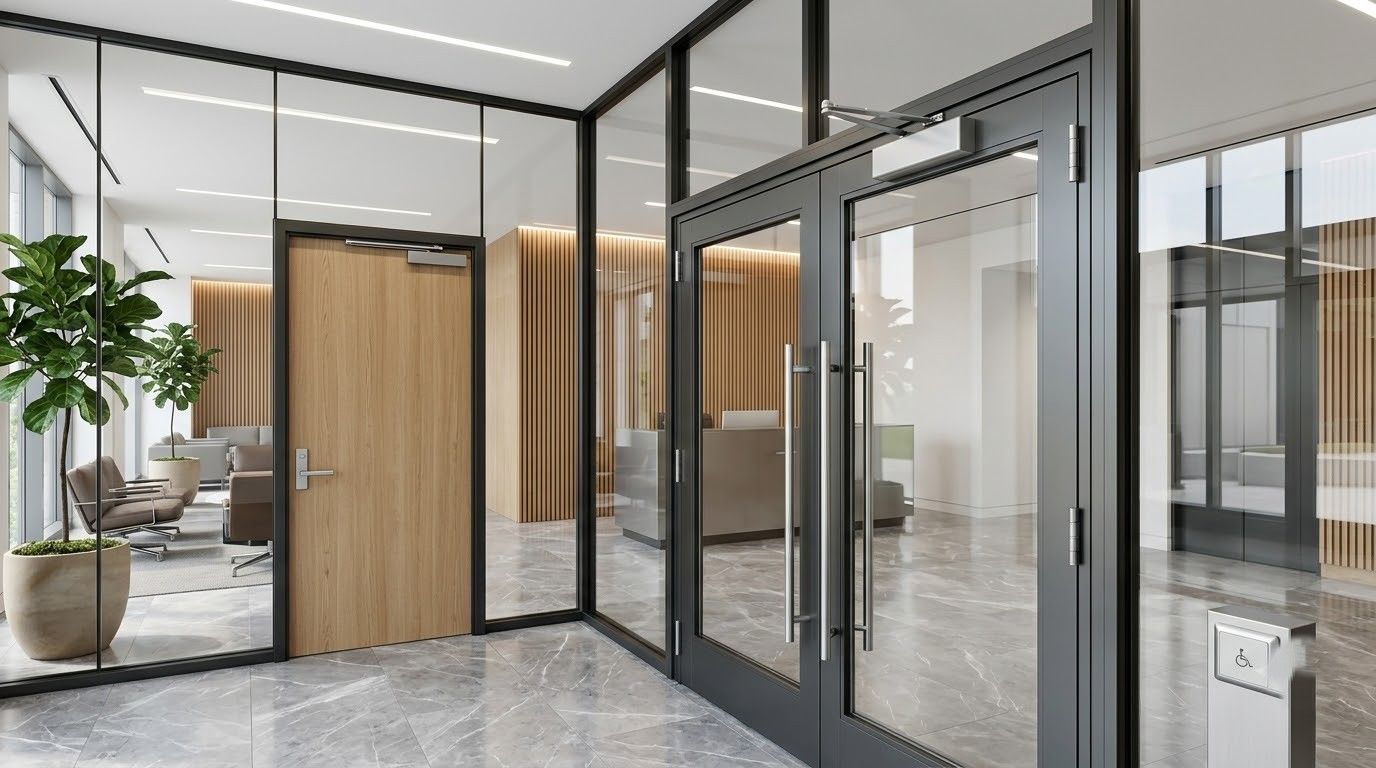
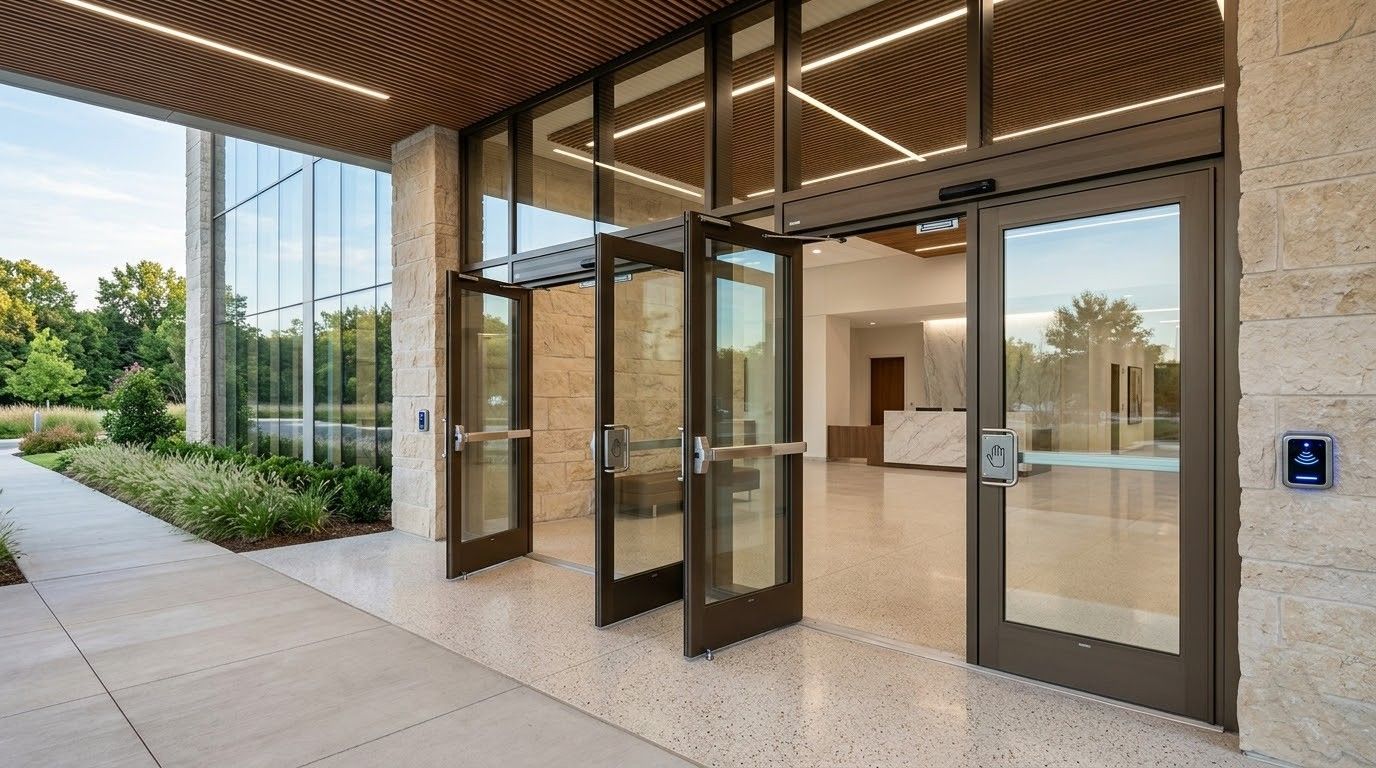

Indy Doors supplies LCN commercial door closers and automatic operators for schools, healthcare facilities, offices, retail properties, multifamily buildings, hospitality facilities and public buildings throughout Indianapolis and Central Indiana. LCN products help control how swinging doors open, close and latch while supporting accessibility, security, life safety and everyday usability.
A closer or operator should be selected as part of the complete opening. Door size, weight, traffic, wind exposure, hinge type, frame condition, mounting space, fire rating and desired operating force all affect product selection. Indy Doors
helps customers coordinate these requirements with the door, frame and other hardware.
LEARN MORE →
Lorem ipsum dolor sit amet, consectetur adipiscing elit, sed do eiusmod tempor incididunt
Lorem Ipsum
LEARN MORE →
Lorem Ipsum
Lorem Ipsum
STEP 04
Lorem ipsum dolor sit amet, consectetur adipiscing elit, sed do eiusmod tempor incididunt
STEP 01
Duis aute irure dolor in reprehenderit in
Lorem ipsum dolor sit amet, consectetur adipiscing elit, sed do eiusmod tempor incididunt
Commercial Door Closers
Door closers control closing speed and help return a door to the latched position after use. LCN offers surface-mounted, overhead-concealed and other specialized closer configurations for different architectural and performance needs.
Surface-mounted closers are common because they are accessible for adjustment and available with multiple arm and mounting options. Concealed closers may be selected when appearance or limited surface hardware is a priority, but the door and frame must be designed to accommodate them.
The closer must have enough power to control the door without making it unnecessarily difficult to open. Adjustment should account for sweep speed, latch speed, backcheck and delayed action where those features are available and appropriate.
Fire and Life-Safety Door Control
Closers are critical components on many fire-rated doors because the opening must return to a closed and latched position. LCN offers products for fire and smoke barrier applications, including closer and holder systems in approved configurations.
Propping open a rated door with an unapproved wedge or stop can prevent it from performing as intended. Where a door needs to remain open during normal use, a listed hold-open system connected to the required release controls may be necessary.
LCN Automatic Door Operators
Automatic operators can help make entrances and interior doors easier to use for people with disabilities, older adults, employees moving equipment and visitors carrying items. LCN offers electromechanical, electrohydraulic and pneumatic operator options for different traffic levels, mounting conditions and use patterns.
Low-energy operators are commonly activated by a push plate, wave switch or compatible access-control signal. Some products are designed primarily for manual use with occasional automatic opening, while others support openings that operate automatically more frequently.
Accessibility and Touchless Operation
An automatic operator alone does not make an entire entrance accessible. Clear opening width, threshold height, maneuvering clearance, hardware operation, activation location, closing timing and approach conditions must all be considered.
Touchless activation can also help users move through an opening without contacting a handle or push plate. The activation method, safety controls and sequence of operation should be selected according to the building and expected users.
Choosing the Correct LCN Product
Closer and operator selection begins with accurate opening information. Useful details include the door width, height, thickness, weight, material, handing, hinge or pivot type, frame construction, interior or exterior location, expected traffic and available power.
Exterior doors in Indianapolis may need additional closing force because of wind and building pressure, but excessive force can create accessibility or usability problems. The opening should be evaluated as a system, including weather seals, latch, hinges, threshold and air pressure.
LCN Product Support From Indy Doors
Indy Doors can help identify compatible LCN closers, arms, mounting plates, automatic operators, activation devices and related accessories. We also coordinate these products with commercial doors, frames, locks and exit devices.
With more than 37 years of specialized experience, Indy Doors
supports projects through product selection, hardware specification, estimating, field measurements, value engineering, delivery coordination and warranty assistance. Contact us to discuss LCN door-control products for your Central Indiana property.
Common Questions
frequently asked
questions.
Why does my commercial door slam or close too slowly?
The closer may need adjustment, service or replacement, but hinge wear, door alignment, temperature, wind and building pressure can also affect operation. A leaking or damaged closer should be evaluated rather than repeatedly adjusted.
Can an automatic operator be added to an existing door?
Often, but the door, frame, hinges, closer, mounting space, electrical service and opening force must be evaluated. Some LCN products are designed with retrofit applications in mind, while other openings require more extensive changes.
What is the difference between a closer and an automatic operator?
A closer controls the door as it returns to the closed position after someone opens it. An automatic operator uses power to open the door and then controls closing according to its programmed or hydraulic operation.
Does an automatic operator make a door ADA compliant?
Not by itself. Accessibility depends on the complete entrance, including clear width, maneuvering space, threshold, opening force, controls, timing and hardware. Applicable requirements should be reviewed for the specific building.
How often should commercial door closers be inspected?
High-traffic and fire-rated openings should be observed regularly for leakage, loose fasteners, slamming, incomplete latching and changes in operation. Formal inspection frequency depends on the building, use, product and applicable maintenance or fire-door requirements.