Can You Replace a Commercial Door Without Replacing the Existing Frame?
September 30, 2026
QUICK ANSWER: In most cases, yes. A commercial door can be replaced while the existing frame stays in place, as long as the frame is square, plumb, securely anchored, and free of structural damage. The new door also has to match the existing hinge, lock, and closer preparation exactly, since these locations vary by manufacturer. Fire-rated openings add another layer: the frame's label has to remain intact and legible, and the finished assembly has to stay within its tested configuration. When the frame has shifted, corroded, or lost its labeling, door-only replacement stops being a realistic option.
A steel frame anchored into a masonry wall three decades ago is not something anyone wants to remove unless they have to. Cutting it out means opening up the surrounding brick, block, or drywall, patching the finish, and rebuilding an opening that was probably working fine before the door itself started causing problems. That is why, when a commercial door starts sagging, dragging, or failing to latch, the first question worth asking is not what replacement door to order. It is whether the frame in front of you is even part of the problem.
Most of the time, it isn't. Commercial hollow metal frames are built to outlast the doors that hang in them by decades, and industry practice reflects that: when a frame is sound, only the door leaf gets replaced. The work that determines whether this approach holds up happens before anyone orders a new door.
What the Existing Frame Has to Have Going for It
A frame earns the right to stay in place by passing a handful of physical checks. None of them are complicated, but skipping any of them is how a simple door swap turns into a mid-project surprise.
Square And Plumb
The frame's jambs and head need to sit at true right angles to each other, with no racking or twist. A frame that has shifted out of square will bind a new door no matter how well that door is built.
Secure Anchoring
The frame has to be firmly fastened to the surrounding wall, whether that is masonry, steel stud, or wood framing. Loose anchors let the whole frame flex under daily use, which shows up as a door that will not stay latched.
No Structural Damage
Bent jambs, corroded base metal, or a head that has been struck and deformed all compromise how the frame holds a door. Surface rust and cosmetic dents are usually not disqualifying. Corrosion that has eaten into the steel, or a frame that has been pried or impacted out of shape, usually is.
Intact Prep
The mortises and reinforcement plates for hinges, strikes, and closers need to still be usable. Stripped screw holes or torn-out reinforcement can sometimes be repaired, but heavily damaged prep areas push the calculation back toward frame replacement.
A field evaluation is the only reliable way to check all four. Indy Doors
walks the existing opening, tests the frame for movement, and inspects hinge and lock locations before recommending whether the door alone can be replaced or the frame needs to come out with it.
Matching the New Door to What Is Already There
Commercial doors are not interchangeable the way a residential prehung unit often is. Hinge spacing, backset, strike height, and closer preparation all vary by manufacturer, and a door built to one company's specification will not simply drop into a frame prepped for another.
Dimensions
Width, height, and thickness all need to match the existing opening, with 1-3/4 inch the standard thickness for most commercial doors.
Hinge Locations
The number of hinges and their exact position on the frame have to align with the new door's prep, or the door will not hang correctly.
Lock And Strike Prep
Backset, the distance from the door's face to the center of the lock, has to match the strike already cut into the frame. A mismatch here usually means the door has to be modified on site or swapped for a different unit.
Handing
Left hand, right hand, left hand reverse, and right hand reverse all describe swing direction and which side the hinges land on. Getting handing wrong is one of the most common ordering errors on a replacement project.
Closer And Panic Hardware Prep
If the opening uses a surface-mounted closer, panic device, or electrified hardware, the new door needs matching reinforcement in the right locations.
This is also where wood-to-steel or steel-to-steel upgrades come into play. A door built and prepped to match an existing frame's hardware locations can go in without disturbing the surrounding wall, which is a common reason businesses upgrade to a more durable hollow metal door during a routine replacement instead of waiting for a full opening rebuild.
TIP: Backset is one of the most frequently mismeasured dimensions on a replacement order. Measure from the face of the door to the center of the lock hole, not from the edge of the door, and confirm it against the existing frame's strike before ordering.
Fire-Rated Openings Change the Calculation
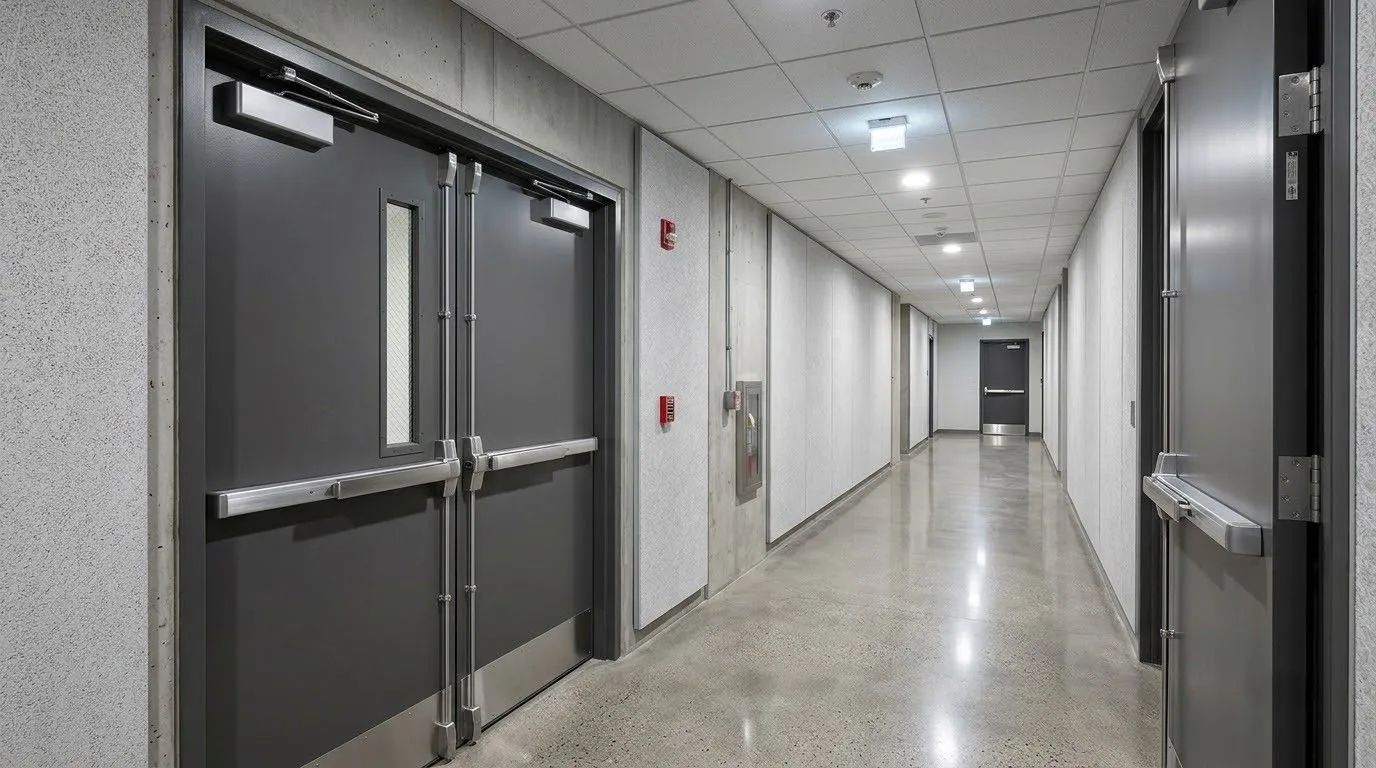
A fire-rated opening is not just a door with a label on it. It is a complete, tested assembly, and the door, frame, hinges, latching hardware, closer, and seals all have to work together within the configuration that was originally tested and listed. Replacing the door alone on a fire-rated opening is still possible, but it comes with stricter conditions than a standard opening does.
The frame's label has to still be present, legible, and unpainted. Labels typically sit on the hinge jamb face or the head of the frame, behind the door stop, and a label that has been painted over or removed means the frame no longer has a way to confirm its rating. The replacement door has to carry a label for the same rating as the frame, and the clearance between the new door and the frame generally cannot exceed one-eighth of an inch on the top and sides. Hardware also has to stay within what the listing allows. Swapping in a closer, hinge, or latch that is not part of the tested configuration can affect the rating even when the door and frame themselves are both properly labeled.
WARNING: A painted-over or missing label on a fire-rated frame is one of the most common issues found during inspection. If the frame's label cannot be located or read, it needs to be evaluated before a replacement door is ordered, since the frame itself may need attention regardless of the door's condition.
When the Frame Has to Come Out Too
Door-only replacement is the more common path, but it is not always the right one. A few conditions consistently point toward replacing the frame along with the door.
- Visible racking, bowing, or twist that keeps the opening out of square
- Corrosion at the base of the jambs that has compromised the steel, often from long-term moisture exposure
- Hinge, lock, or closer prep so damaged or non-standard that no available door can match it
- A missing or illegible label on a fire-rated frame that cannot be reissued
- An opening that needs to change size, swing direction, or accessibility clearance beyond what the existing frame allows
None of these rule out a clean, functional replacement. They just mean the frame is part of the project instead of a fixed starting point.
Accessibility Still Matters, Even When the Frame Stays
Reusing a frame does not remove accessibility from the conversation. Door closer force, clear opening width, and maneuvering clearance are all measured at the finished opening, not just at the door itself, so a new door and hardware set still need to be evaluated against current accessibility clearances even when the surrounding frame is untouched. In practice, this usually comes down to hardware selection rather than frame work, since closers, thresholds, and lever hardware can typically be adjusted or replaced independently of the frame.
The Field Verification Step That Prevents Ordering Mistakes
Every one of the checks above depends on accurate information gathered at the actual opening, not from memory or a quick look. Before Indy Doors recommends door-only replacement, the process includes:
- Measuring width, height, and thickness of the existing door
- Recording hinge, lock, and closer prep locations
- Confirming handing and swing direction
- Inspecting the frame for square, plumb, and anchoring
- Checking fire labels on both the door and frame, where applicable
- Photographing the complete opening for reference during ordering
Skipping this step is how a business ends up with a door that technically fits the rough opening but will not hang correctly, latch reliably, or maintain a fire rating. It is a short process compared to the disruption of discovering a mismatch after a new door has already been delivered.
What This Means for Your Next Replacement
The frame in front of you is very likely doing its job, even if the door hanging in it is not. Confirming that, and matching a replacement door to what the frame already expects, is what keeps a routine repair from turning into a wall reconstruction. Indy Doors
evaluates hinge locations, lock preparation, frame condition, and fire labeling on every commercial opening across Indianapolis, Indiana and Central Indiana before recommending a path forward, so the decision is based on what the opening actually needs rather than a guess.
Frequently Asked Questions
Can a wood commercial door be replaced with a hollow metal door in the same frame?
Often, yes, provided the new steel door is prepped to match the existing hinge and lock locations in the frame. This is a common way businesses move to a more durable door during a routine replacement, though the frame still needs to pass the same square, plumb, and anchoring checks as any other reuse situation.
How do I know if a replacement door's hardware prep will match my existing frame?
The only reliable way is to measure the existing hinge, lock, and closer locations directly from the opening and compare them against the replacement door's specification sheet before ordering. Two doors that look identical from a distance can use completely different prep locations depending on the manufacturer.
Does keeping the existing frame affect the opening's fire rating?
It can, if the frame's label is missing, painted over, or the finished clearance between the new door and frame falls outside what the listing allows. When both the door and frame carry valid labels for the same rating and the installation stays within the tested configuration, keeping the existing frame does not itself reduce the rating.
What is door slab replacement?
Door slab replacement is the industry term for replacing only the door leaf while leaving the existing frame in place. It applies to hollow metal, wood, and some storefront configurations, and it is the standard approach whenever the frame itself is still sound.
Can an aluminum storefront door be replaced without replacing the storefront frame?
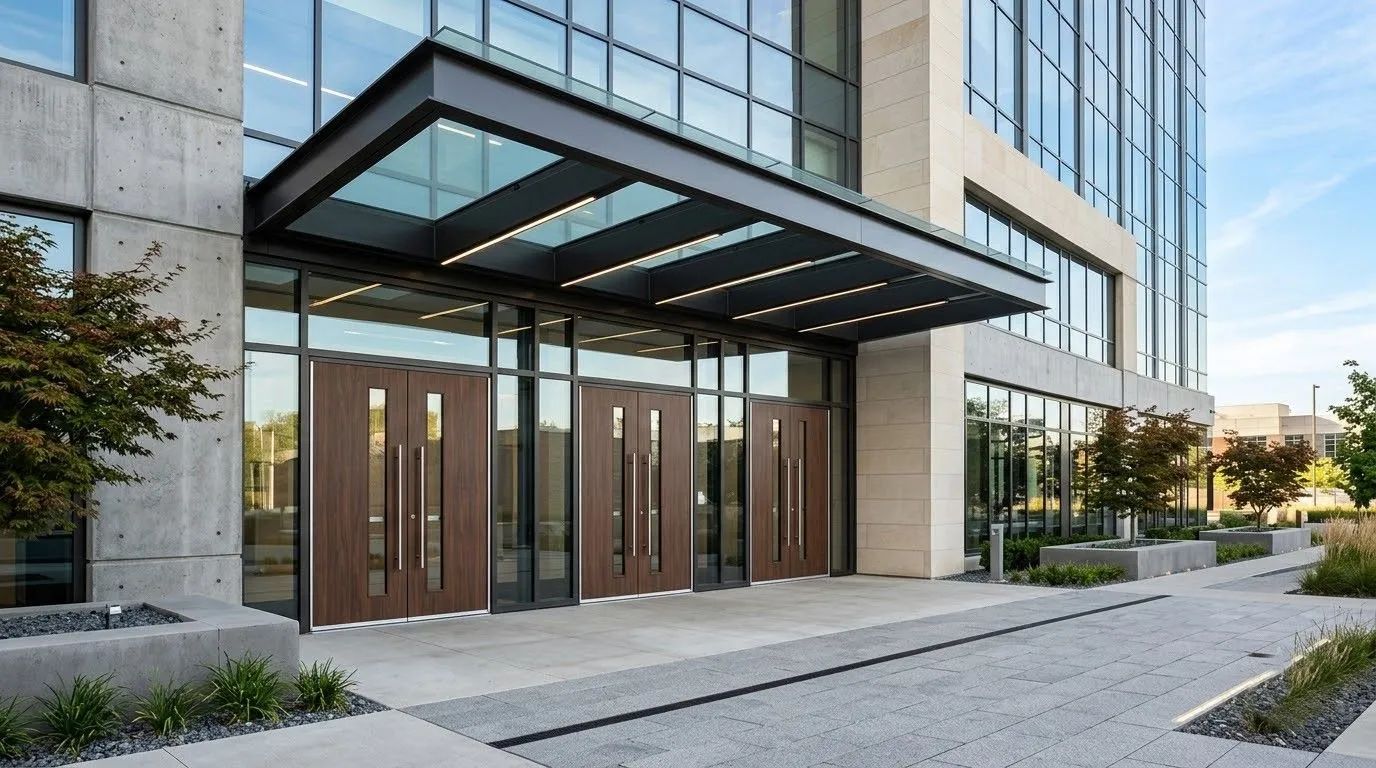
Often, yes, since storefront systems are typically built with the door and frame as separate components. The main considerations are matching the door's hardware prep and glazing configuration to the existing frame, along with confirming the frame's extrusion is not damaged or discontinued.
Why would two doors that look identical not be interchangeable?
Hinge spacing, backset, strike height, and reinforcement locations are set by each manufacturer and are not standardized across the industry. Two doors of the same size and material can still require completely different frame prep, which is why matching is done by measurement rather than by appearance.
Confirming Fit Before Committing to a New Door
A commercial door rarely needs a new frame around it. What matters is whether the frame is square, plumb, securely anchored, and free of structural damage, and whether the replacement door matches the existing hinge, lock, and closer locations. When those conditions hold, a door-only replacement solves the problem without opening the surrounding wall. When they do not, the frame becomes part of the project instead of a fixed starting point, a distinction worth confirming before any order goes in.
Fire-rated openings carry extra conditions, since the label, hardware, and clearances all have to stay within the assembly's listing for door-only replacement to hold up. Getting these details right depends on measuring the actual opening rather than guessing. Indy Doors
has spent 37
years evaluating doors and frames across Indianapolis, IN, and that experience is what turns a swap into one that hangs correctly, latches reliably, and holds its rating without disturbing a wall that never needed to come down.